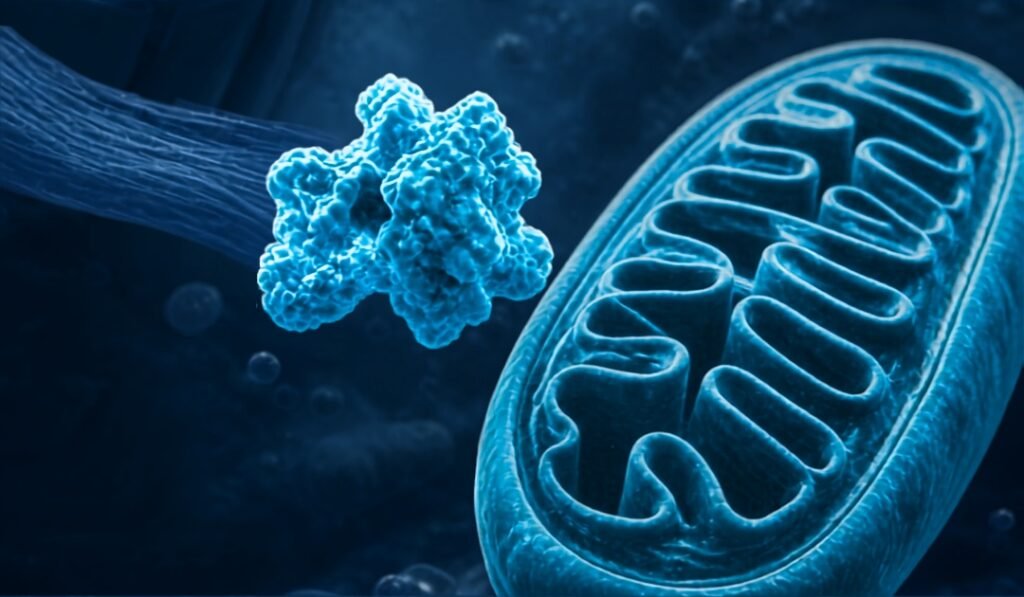
We recently spoke with Professor Botond Roska, director of the Institute of Molecular and
Clinical Ophthalmology Basel (IOB), a non-profit institute co-founded by Novartis, the
University of Basel and the University Hospital of Basel.
His team's groundbreaking research, recently published in Nature, introduces a new
platform for mitochondrial targeting named MitoCatchHistorically, the largest was
challenge in mitochondrial transplantation the administration: sufficient mitochondria in the
get the right cells. The IOB platform solves this by isolating human mitochondria and using them
modify with a specific targeting protein.
This protein functions as a precision guidance system, whereby the modified mitochondria
be able to specifically target designated cells and penetrate them to their
to restore health. Crucially, the in vivo study has successfully demonstrated that this
modified mitochondria actively target retinal ganglion cells (RGCs) in the eye, this
penetrate and rescue.
The breakthrough
This breakthrough is highly relevant because Autosomal Dominant Optic Atrophy (ADOA) a
is a genetic disorder that is usually caused by the OPA1 gene in the cell nucleus. In ADOA
mitochondria, the 'energy factories' of the cell, form the absolute core of the problem.
The genetic mutation in ADOA leads to a deficiency of the OPA1 protein: instead of two healthy
If only one of the copies of the gene that work together to produce sufficient OPA1 functions, only one functions.
copy. This 'half dose' is not sufficient, and the lack of OPA1 disrupts the mitochondria.
This defect causes a severe energy crisis which specifically affects the RGCs—exactly the same
nerve cells responsible for transmitting visual signals from the eye to the
brain. Deprived of cellular energy, these crucial RGCs gradually degenerate and die, which
is the direct cause of progressive vision loss in ADOA patients.
By proving that modified mitochondria can successfully target these exact
cells, they can penetrate and protect, Professor Roska's platform opens a
exciting new perspective for restoring the vital energy that ADOA patients
to lose.
The strategy: Why LHON comes first
Although the basic mitochondrial technology has been proven, its application to RGCs is still
in a recent phase. The team is understandably cautious and prioritizes Lebers
Hereditary Optic Neuropathy (LHON) for the first clinical studies on humans.
Leber, like ADOA, also focuses on the RGCs. Because LHON is directly caused by
mutations in the mitochondrial DNA itself, provide the supply of healthy mitochondria a direct,
simple solution to stop the loss of vision. By starting with LHON first, you can
the laboratory a safe, clinical baseline (baseline) determine for the
delivery platform before more complex genetic diseases are tackled.
To bring this administration platform from the laboratory to the patient, the team makes
currently using advanced disease modelingIn this process, post-mortem human retinas are kept alive in culture dishes for weeks to verify exactly how
the therapy effectively targets human cells.
The immediate plan is to set up a spin-off company and venture capital (venture funding) to
to take steps to optimize production. The goal is to have a first within the next three years
to start a clinical trial on humans, with a focus on safety. This initial study will prioritize
to Leber's Hereditary Optic Neuropathy (LHON).
The ADOA Challenge: Overcoming the “dilution trap”
Applying this initial technology to ADOA presents a unique hurdle that a much
requires a more advanced approach. Unlike LHON, it is located OPA1-gene itself in the cell nucleus,
not in the mitochondria.
Therefore, the advantage of simply injecting standard healthy mitochondria would be
be only temporary. Over time, the healthy OPA1 proteins would become diluted and
broken down, because the patient's mutated cell nucleus cannot keep up with production. Although
healthy mitochondria could be repeatedly injected at regular intervals
become, this would trigger inflammation that further endangers vision.
Therefore, ADOA is not a logical first step for this technology.
Potential pathways for the future: Engineering mitochondrial DNA
To overcome the limitations of temporary treatment for ADOA and ADOA-plus, the
group will investigate new approaches in the coming years that may potentially replace a treatment with a
single injection make this possible for these diseases.
Author: Peter Makai